
23/11/2026
FRP vs Concrete Stormwater Tanks for Commercial Projects
Written by the CSG Composites Team
Key takeaways
- An on-site detention (OSD) tank stores stormwater runoff and releases it at a controlled rate to reduce flooding downstream. Your council sets the volume and discharge rate.
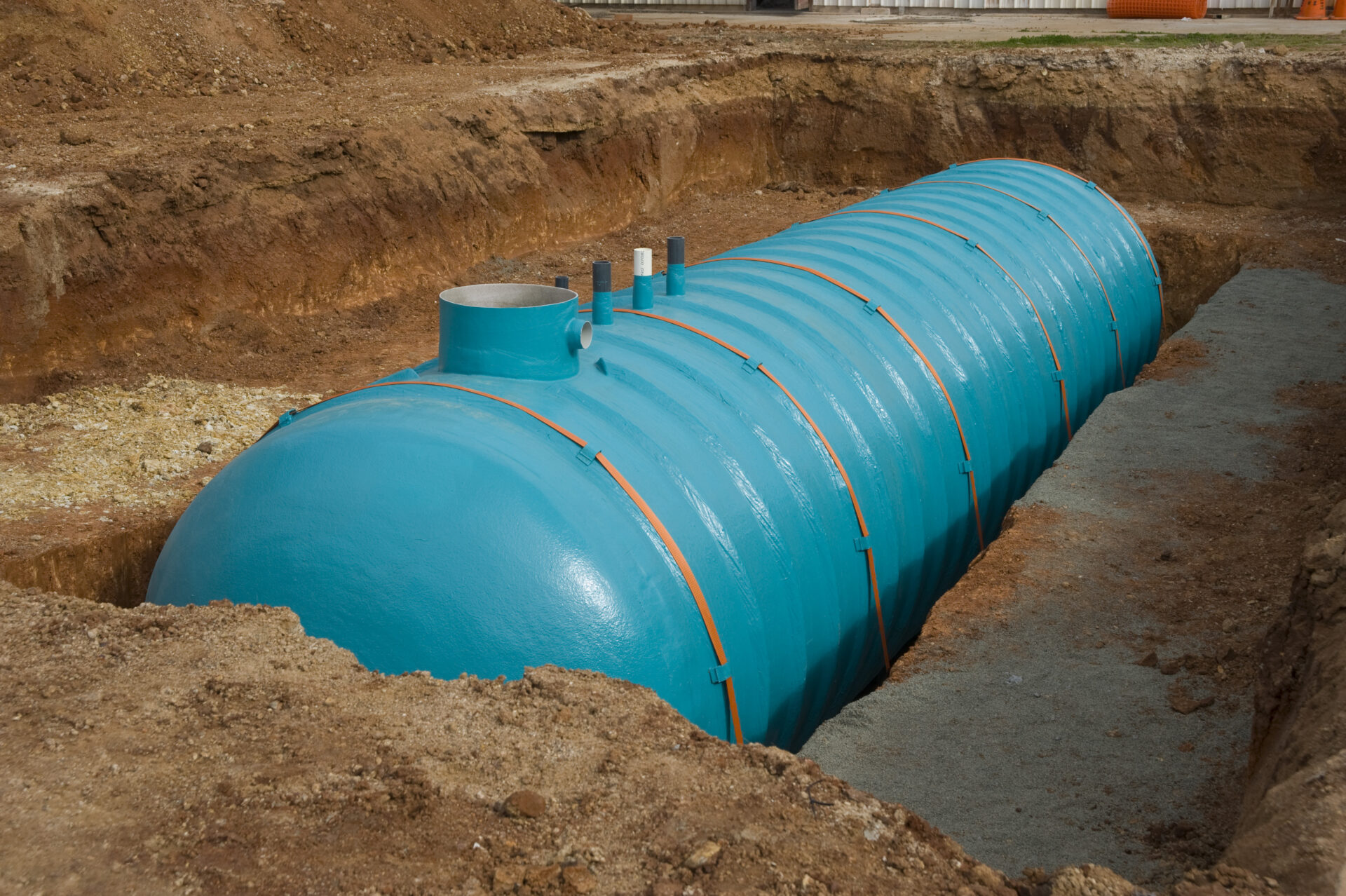
- Hydrosave FRP (fibreglass) tanks are lightweight, corrosion-resistant and built as a single piece, with no joining on site.
- OSD reduces flooding by releasing water slowly. A rainwater tank stores water for reuse.
- Neither FRP nor concrete suits every site. Groundwater, loads above the tank and required volume decide it.
- In high groundwater, an empty buried tank can float unless it’s anchored.
- FRP and GRP refer to the same type of material: plastic reinforced with glass fibres.
- Get the design life and warranty in writing. Hydrosave carries a 25-year warranty (T&Cs apply).
Start with your council’s on-site stormwater detention (OSD) requirements, then look at the site. That order matters more than the material. This guide compares FRP vs concrete stormwater tanks for commercial projects: what an OSD tank does, how it differs from a rainwater tank, how fibreglass reinforced plastic (FRP) and concrete compare, and which site conditions should drive the choice.
It’s written for builders, developers and engineers specifying underground stormwater storage. CSG Composites makes Hydrosave tanks from FRP, so we’ve stuck to our own product specifications and guidance from Sydney Water and NSW councils. Where the answer depends on your site, not the material, we say so.
What is a commercial stormwater (OSD) tank?
An OSD tank holds stormwater runoff from a site, then releases it slowly so the council’s drainage system isn’t overloaded (Sydney Water). In the City of Parramatta, for example, commercial and industrial sites can use above- or below-ground OSD, but residential developments must use underground tanks (City of Parramatta). Councils set when OSD is required and how it must be designed, so start with your council’s OSD specification (Hornsby Shire Council).
How an OSD system works
An OSD system controls how fast water leaves the site. Under the City of Parramatta’s engineering guidelines, for example, OSD must drain to council’s drainage system by gravity, the orifice plate must be screened, and the system needs an overflow spillway (City of Parramatta). Sydney Water’s guide for OSD connecting to its assets requires a release valve where there’s a risk of gas build-up or hydrostatic pressure, and the maximum water level must sit at least 300 mm below all habitable floor levels (Sydney Water). Requirements differ between councils, so treat these as examples.
OSD tank vs rainwater tank
The two do different jobs. OSD exists to manage flooding. Parramatta’s engineering guidelines describe its job as stopping new development from increasing peak flows and flooding downstream (City of Parramatta).
A rainwater harvesting tank keeps water for reuse. Hydrosave underground rainwater tanks collect water from roof areas or hard standings through a filter chamber that separates leaves and debris (CSG Composites).
Some developments use both. In the City of Parramatta, for example, the empty airspace in a rainwater tank can count as a partial offset against the OSD volume a site needs (City of Parramatta). Ask your engineer how your council treats rainwater storage in OSD calculations.
FRP vs concrete stormwater tanks: what to compare
| Factor | FRP (CSG Hydrosave) | What to check with any supplier |
| Weight and delivery | Lightweight, so easier to handle and cheaper to transport | Crane size and site access needed |
| Joints | Built as a single piece, with no joining on site | How sections are joined and sealed |
| Corrosion | Corrosion-resistant, with a smooth inner surface that inhibits corrosion and bacterial growth | How any steel reinforcement is protected |
| Installation | Hydrosave underground rainwater tanks install faster than concrete tanks | Installation time and site disruption |
| Ground forces | Reinforcement ribs that absorb external impact and forces within the ground | How the tank is designed for your soil and burial depth |
| Council requirements | Hydrosave overflow tanks are customisable to council regulations and site conditions | Whether the design meets your council’s OSD specification |
| Capacity | 0.9 m³ to 671 m³, custom designed | Whether your required volume fits one tank |
| Warranty | 25 years (terms and conditions apply) | Design life and warranty terms in writing |
Site conditions decide the material
Groundwater. When a buried tank is empty and groundwater rises, it can be pushed up out of the ground unless it’s anchored. Outside high water table or flood-prone areas, the weight of backfill and pavement over the tank is usually enough to stop it floating (Minnesota Pollution Control Agency). Ask how the tank is anchored, whichever material you choose.
Loads above the tank. If the tank will sit under a car park or driveway, ask the supplier to confirm the tank is designed for the vehicle loads on your site.
Access and delivery. On tight or remote sites, weight matters. For a mining accommodation facility in regional WA, Arris used nine 95,000 L CSG Composites underground tanks. All nine were delivered on time and arrived intact after a long trip on rough roads.
“CSG Composites were very good to us as they were able to meet the short lead time and have the tanks ready to go.” Jim Kelly, Managing Director, Arris (case study)
Frequently Asked Questions
Is fibreglass or concrete better for an underground stormwater tank?
It depends on the site. Fibreglass (FRP) is lightweight and corrosion-resistant, and a Hydrosave tank arrives as a single piece with no joining on site. Concrete is heavier, which affects delivery and installation. Groundwater level, vehicle loads above the tank and the volume your council requires should decide the choice.
What is the difference between FRP and GRP tanks?
In practice, nothing. FRP (fibre reinforced plastic) and GRP (glass reinforced plastic) are names for the same type of composite: plastic reinforced with glass fibres, often called fibreglass (Designing Buildings). CSG Composites uses the term FRP. When comparing quotes, check the resin system and design rather than the name.
How long does an FRP stormwater tank last?
It depends on the design, the resin system and the installation. FRP tanks rely on the right resin system for long-term performance. Ask for the design life and warranty in writing. CSG Composites’ Hydrosave underground tanks carry a 25-year warranty (terms and conditions apply).
How much does a stormwater detention tank cost?
It depends on the volume your council requires, your site and the installation scope (excavation, anchoring, backfill and connections). To compare fairly, get quotes for the same capacity with installation, anchoring and warranty spelled out. For a Hydrosave quote, call CSG Composites on 1300 139 971.
Do I need council approval for an OSD tank?
It depends on your council. Councils set when OSD is required and publish their own design specifications. In Hornsby, for example, you lodge an application if your certifier requires council approval of the OSD design (Hornsby Shire Council). Check your council’s requirements before ordering a tank.
Match the tank to your site
FRP vs concrete stormwater tanks isn’t a question with one answer for every project. Start with your council’s OSD specification, as it sets the storage volume, discharge rate, and design rules your tank must meet.
Then look at the site: anchoring in high groundwater, vehicle loads under car parks and driveways, and access for delivery on tight or remote sites.
Hydrosave FRP tanks suit projects that need a lightweight tank built as a single piece, with no joining on site. Each tank is custom designed, from 0.9 m³ to 671 m³, and backed by a 25-year warranty (terms and conditions apply). See the Hydrosave underground tank range, or contact our team with your council requirements, site conditions and required volume for a quote. You can also call 1300 139 971.
Related Articles